

Introduction
The fate of your website hinges completely on the hosting company you choose. Listen. How many times have you watched companies fail because they simply went for the cheapest web hosting services? It happens all the time. cPanel Web Hosting appears to be the best choice, thanks to its user-friendly interface and powerful features. But do you know what people don’t tell you about? Not all cPanel hosting services are created equally. In my opinion, OnliveServer has always offered an ideal balance of performance and support that can help us avoid any troubles we might have otherwise run into. This should not be taken lightly. Being aware of the technical subtleties that differentiate one company from another can prove crucial to the success of our website.
Understanding cPanel Web Hosting
However, all hosting control panels are not created equally. The ease of use provided by the cPanel Web Hosting is quite commendable when it comes to making life easier for first-time users. However, this ease of use is far from being the only factor that makes cPanel an indispensable tool. Frequent updates and widespread compatibility make this a must-have solution for website management. One may ask how different it can be, since all control panels should offer that kind of functionality. But most control panels lack this feature. For example, cPanel is used by more than 60 percent of the market share.
Key Features and Benefits
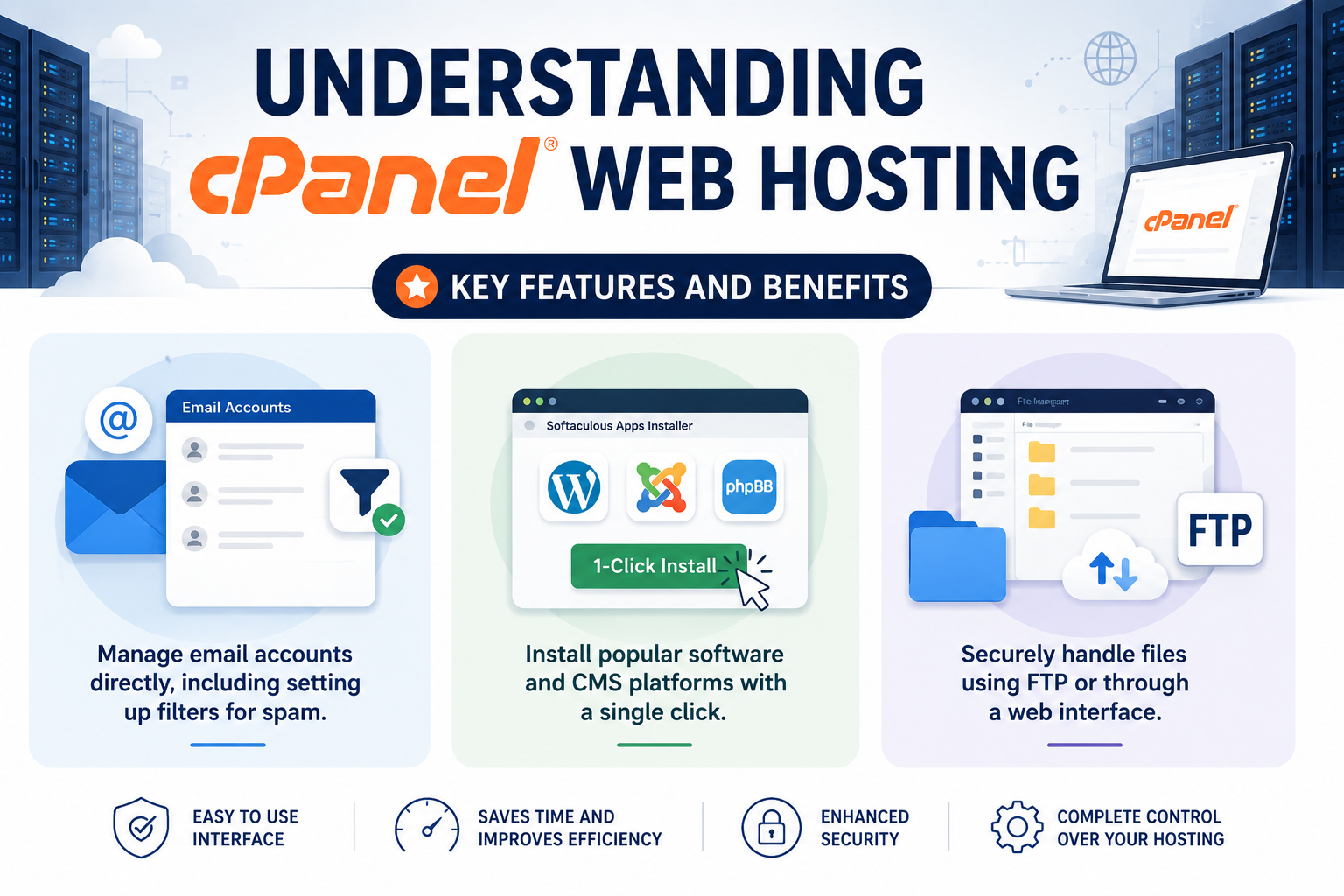
- Manage email accounts directly, including setting up filters for spam.
- Install popular software and CMS platforms with a single click.
- Securely handle files using FTP or through a web interface.
This won’t help if your host’s underlying infrastructure is garbage. cPanel simplifies intricate server configurations, allowing even novices to concentrate on expanding their online footprint instead of wrestling with code.
Choosing the Right Hosting Platform
So why is it important? Your entire company is at stake. The web host that you choose will determine the performance and security of your site as well as any room for future expansion that it may have. No. That is only part of the story. Here is the part that nobody ever tells you.
Hardware Considerations
- Boost page delivery speed with a fast processor.
- Handle multiple tasks and database requests with ample RAM.
- Improve site loading times significantly with SSD storage.
I thought all hosts provided good hardware. Not all do. These are some of the most important parts for any host. To overlook them is surefire way to slow things down and make visitors unhappy. Studies indicate that a mere second in increased page loading time can reduce conversion rates by up to 7 percent. Beware of unlimited resource promises made by some hosts as they tend to overload servers with too many people resulting in bad service for all. You will not get anywhere if you need dedicated server capabilities.
Maximizing Uptime and Performance
Uptime is not just statistic; it determines whether your website is up or down. Get it? If your website is down, you’re missing out on income, goodwill, and clients. Point blank. 99% uptime may seem like an excellent statistic, but in actuality, it means your site will be down more than 3.6 days per year. I took 99.9% to be the norm. Guess again.
Ensuring High Availability
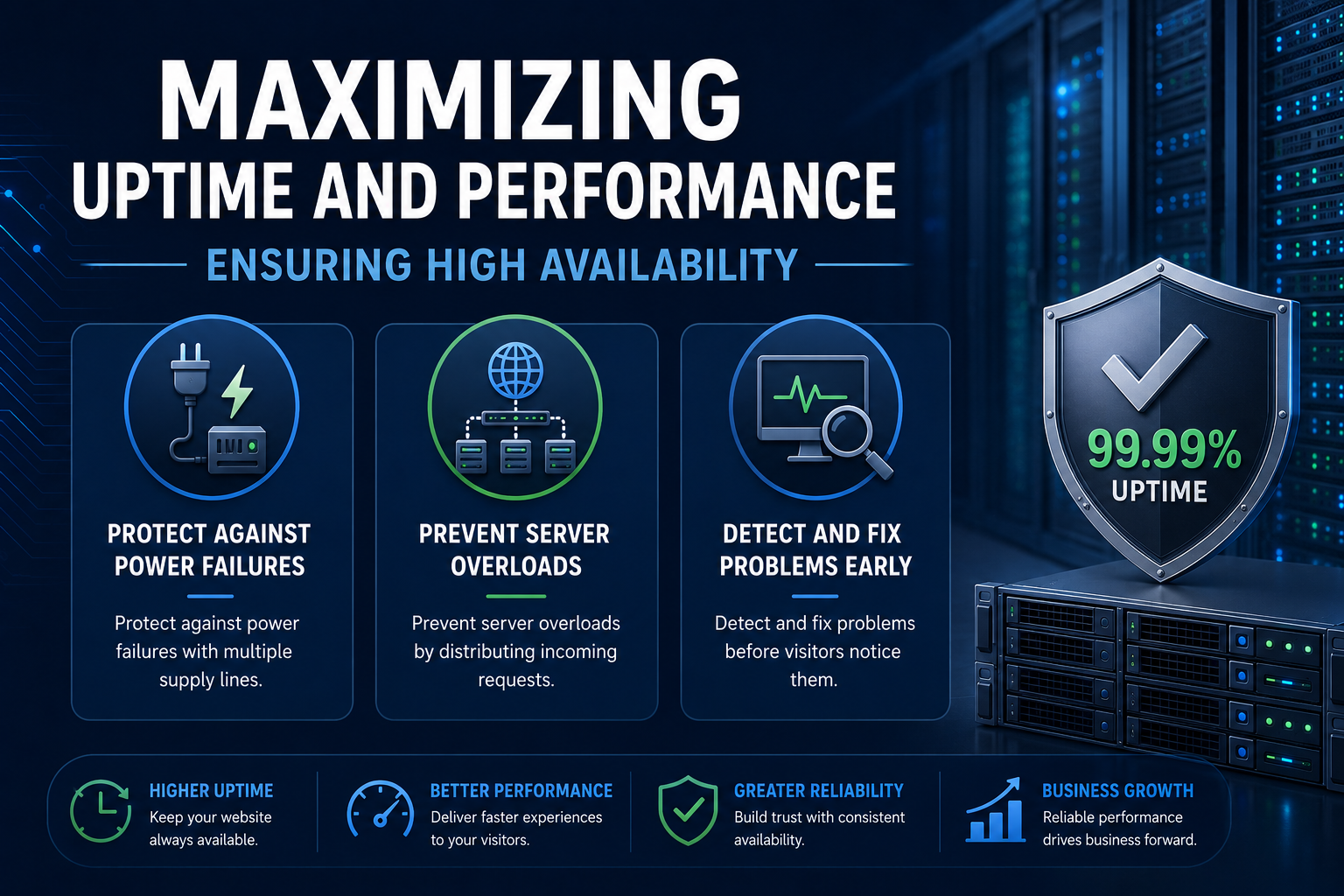
- Protect against power failures with multiple supply lines.
- Prevent server overloads by distributing incoming requests.
- Detect and fix problems before visitors notice them.
Beware of hosting firms that do not provide a clear explanation of their system’s redundancy, because vague answers often indicate weak infrastructure planning. Even a reliable server cannot protect your website if poor configuration or inefficient code causes downtime. With a strong uptime record and well-managed hosting environment, businesses can maintain better stability, smoother performance, and fewer service interruptions.
At 99.99%, they certainly have made a mark in ensuring that your site remains online all the time.
Unpacking Security in cPanel Hosting
Web security is not just about using firewalls; it’s an ongoing struggle. Many site administrators believe that having a typical configuration in cPanel provides foolproof security, but unfortunately, this is rarely the case. Wait a minute. Doesn’t having a firewall make all sites secure? Well, not exactly. Over 60% of all small business websites will be the target of a cyber-attack at some point, so it’s best to take preventive action. Be wary of phishing attacks that target your administrative password.
Threat Detection
The cPanel has its own system to detect threats immediately but setting it up correctly is important. Some lazy setups fail to recognize small threats, which can be easily avoided by adjusting the sensitivity levels according to traffic trends.
Encryption Standards
Use of TLS/SSL certificates is mandatory. What people don’t tell you is that all your data transmission must be encrypted. Many people miss out on this step because they assume that HTTPS guarantees total safety. It doesn’t.
User Access Management
Limit user permissions. This reduces vulnerabilities from inside threats. Use cPanel’s user management tools to distinguish admin from general access. Get it wrong, and you’re at risk for breaches that damage reputations and violate trust.
Evaluating Customer Support in Hosting
True hosting support isn’t about merely picking up the phone. It’s more than having 24/7 availability or responding quickly. Here is something no one ever mentions: What really counts is knowledge and problem-solving ability. I thought that all that mattered was availability of 24/7. Not necessarily. A recent survey shows that 70% of consumers want their problems solved rather than fast answers.
- Offer diverse channels: Email, chat, phone—all are necessary. Not every issue fits one mode; provide choice.
- Prioritize quality responses: Quick is useless if incorrect. Accuracy and resolution capacity matter more, building trust.
- Provide proactive assistance: Good support teams monitor for potential issues, offering solutions before problems deepen. Watch out for providers who outsource support to unqualified, script-reading teams.
Quality support makes downtime less painful and complex problems easier to solve. This won’t help if your issue stems from deeply custom application code you’ve added yourself. A great host isn’t just about technology, but also about having experts ready to genuinely assist.
Scalability Considerations for Future Growth
Website scaling cannot be left for later because it is imperative. Otherwise, sudden bursts of traffic can paralyze your business operations and earnings. The thing is that scalability is no longer optional but rather critical for future-proof hosting solutions. People assume that adding more memory resolves everything. This is far from being true. For example,
e-commerce websites usually have a 15 percent increase in traffic during holidays.
Scaling Infrastructure
Consider both vertical and horizontal scaling. cPanel can adapt to distributed setups, but initial configuration must account for growth. Plan ahead.
Performance Monitoring
Use cPanel’s built-in tools for performance monitoring. Address bottlenecks proactively. Missing these steps risks sudden downtime. Watch out for providers locking you into rigid, expensive upgrade paths that don’t match your actual needs.
Cost-Benefit Analysis
Evaluate costs against potential growth. Immediate expenses may deter some, but growth flexibility saves money long-term during expansion phases. This won’t help if your application itself is poorly optimized for high traffic, regardless of infrastructure.
Conclusion
In conclusion, neglecting a good cPanel installation can prove to be a risk you definitely can’t afford to take. It is from experience that I understand the importance of getting this configuration right, both for security purposes as well as improved performance. You don’t want to just install and forget but rather manage your site with the dynamic changes and potential threats that come with time. Select a hosting service that facilitates this and helps you grow your changing needs, such as OnliveServer.
Frequently Asked Questions